Archive for the 'river' Category

Aug 14 2010

summer…

Published by admin under boating, home, kayaking, river


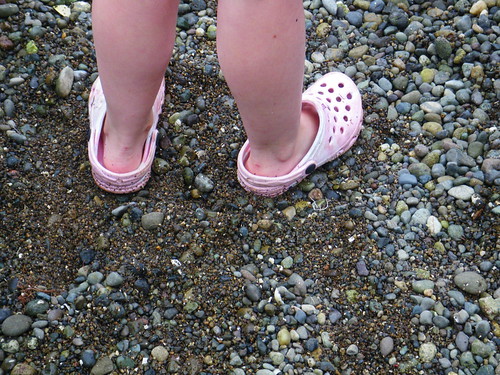
Sadie's feet

…is a pretty busy time! I don’t spend much time on the computer this time of year, and I’ve fallen way, way behind in photo processing and blogging. My faithful old Mac G4 notebook finally deveoped a personality crisis a couple of months back, and I bit the bullet and upgraded to an Intel powered MacBook Pro. Problem was, my old Photoshop didn’t work on the new machine. I finally purchased new Adobe software the other day, but haven’t even gotten around to installing it yet.

I’ve got a few projects going right now that will merit posts of their own when they’re done, but for now, here’s a handful of summer pictures.


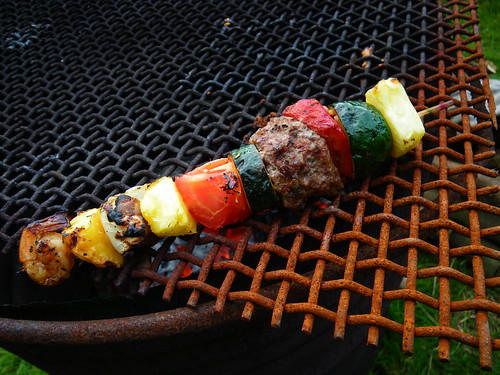
kabob on the grill

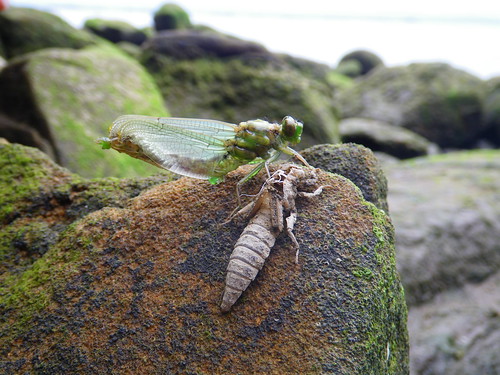
Here’s an Olive Clubtail dragonfly emerging from it’s water dwelling stage. We see this on the river frequently. The smart ones choose a falling tide to climb up out of the water onto a high spot, where they emerge from their previous exoskeleton, unfold and dry their wings and transform into airborne creatures. The not-so-smart ones try to pull this off on a rising tide, and they get wet before they have a chance to finish the process.


Olive Clubtail emerging

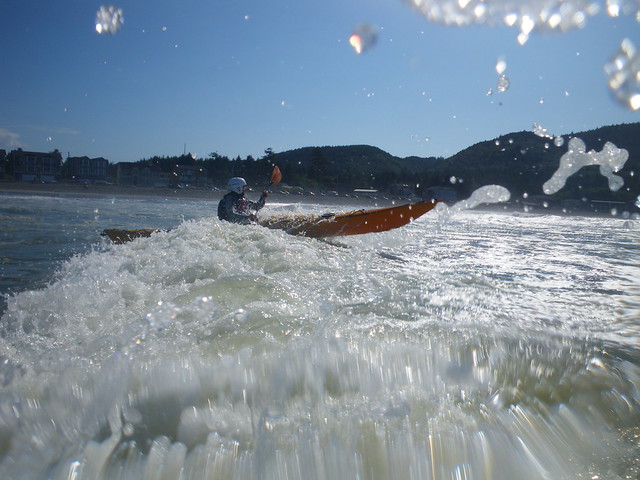
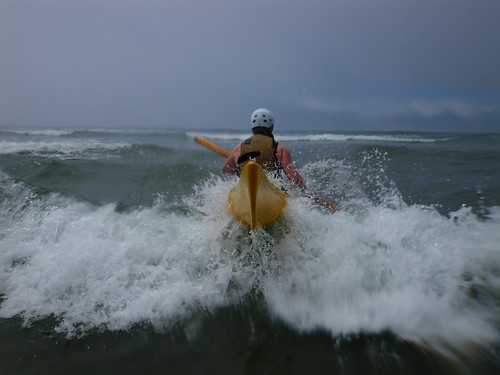
I’ve gotten to do a little bit more coastal paddling this summer than I usually get around to. We had a three day Dynamic Water class in July, and we went to Cannon Beach on the first day to practice skills in the surf.


Katie

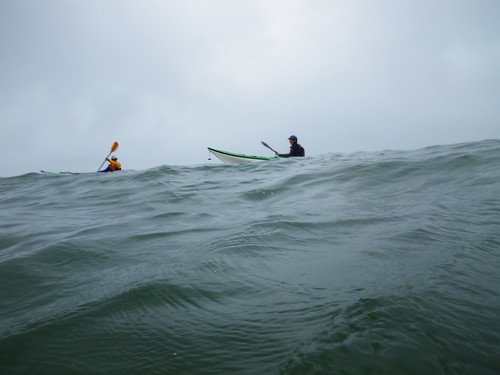
The next two days we spent at Ilwaco, on the infamous Columbia River bar. This picture is from out by buoy nine on a pretty calm day.


swell

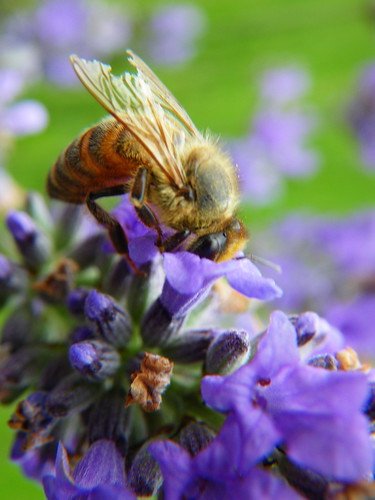
I never realized until I looked at this picture, just how beat up bees get over the course of the summer. Look at those frayed, worn wingtips!


Lavender and honeybee

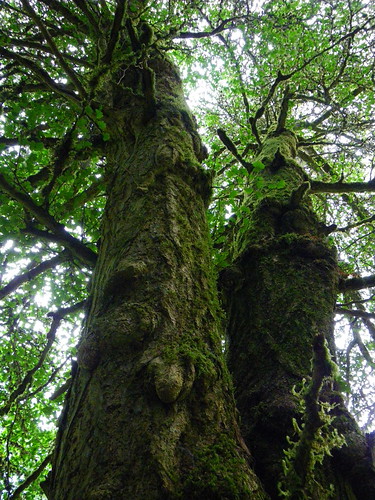
Andrew and Opal and I went out to Brookfield the other day to do some exploring and scouting for the upcoming hunting season. Back in the day, there was a bustling, busy town there, centered around Joe Megler’s salmon cannery. He and his wife Nellie got rich off of the salmon trade, and built a nice mansion there, and she had a Japanese gardener taking care of her grounds. We found the site of the old mansion, and her lawns and gardens are pretty grown over now. But there are still remnants left of her landscaping, including this fantastic old Gingko tree.


Nellie Megler's Gingko tree

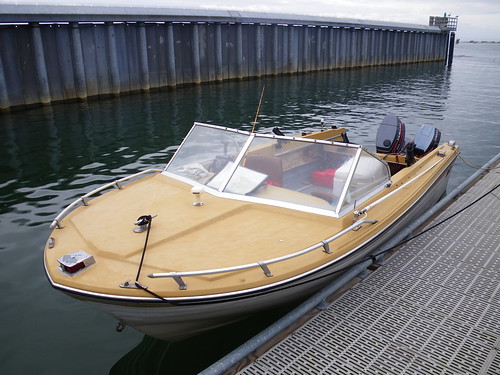
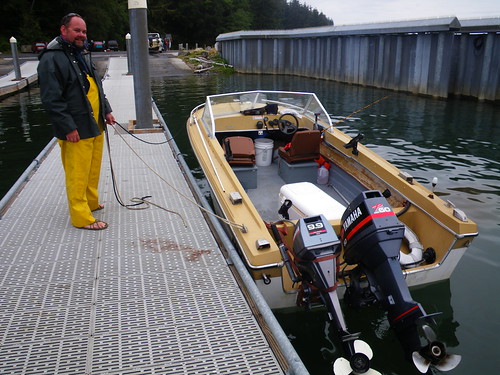
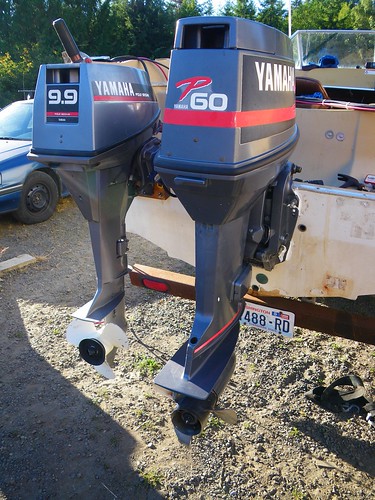
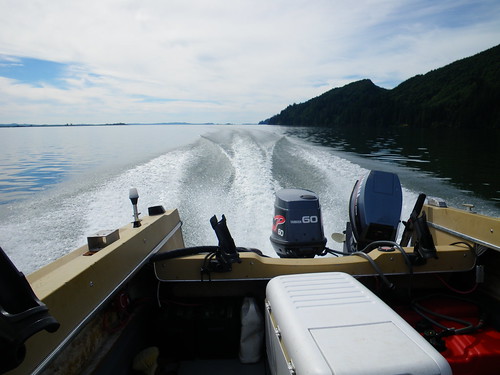
I’ve only been out fishing once this summer. The old Valco is getting too beat up to risk taking her across the bar anymore, and the fishing inside the river has been pretty slow this year. I’m in the middle of putting together a new fishing boat with the engines off of the Valco. I’m nearly finished, and should have it together in time to fish the last week of August in the ocean again. This picture is from the Baker Bay entrance near Chinook. Opal and I went out last week for a few hours, and it was a beautiful day on the river, but fish-less in the end.


#5 at Baker Bay

No responses yet

May 26 2010

spring!

Published by admin under home, kayaking, river


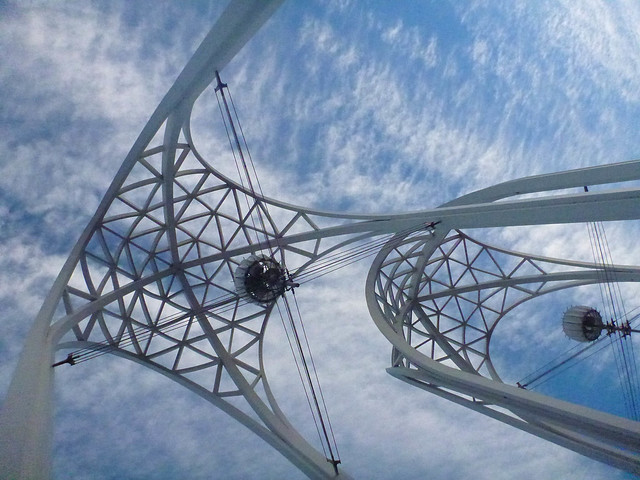
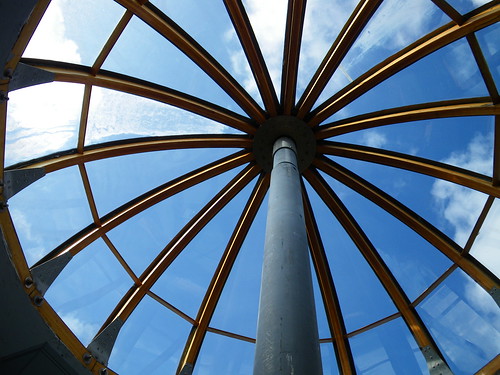
looking up

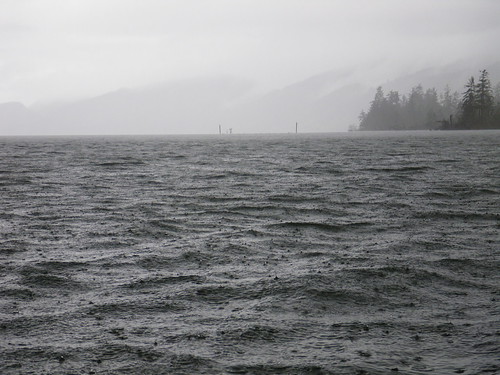
For the last couple of months, my life has revolved around various springtime tasks, and leading our Elderhostel/Exploritas kayaking groups every other week. This has been a very cold, wet, and windy spring. The picture below was taken on March 28th, on our Leadership Scenarios day in Skamokawa. Today, it looks much the same out there, at the end of May!


rain on the river


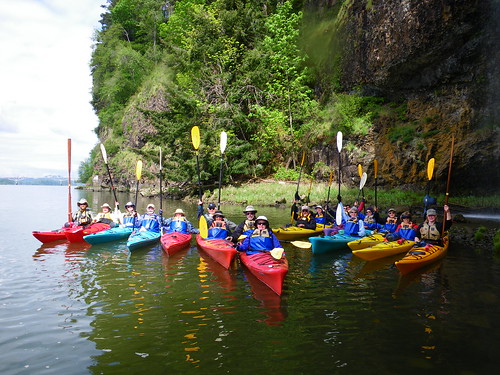
group photo, Exploritas program

I have been involved with Elderhostel groups since 2004, and to date, I have been a co-leader for 84 Elderhostel programs. This year, all four of our spring programs lined up on similar tides, and we paddled the same routes each time. One of these routes was paddling along the cliffs upstream of Cathlamet, created 17 million years ago by the Columbia River basalt flows. There are dramatic waterfalls, and a population of plants that are found nowhere else in the county, including various wildflowers, Oregon white oak, Madrone and even poison oak.


waterfall and ferns

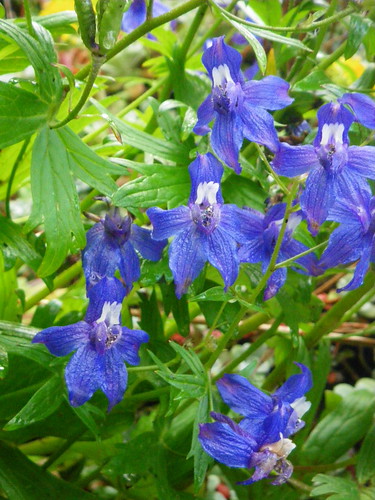
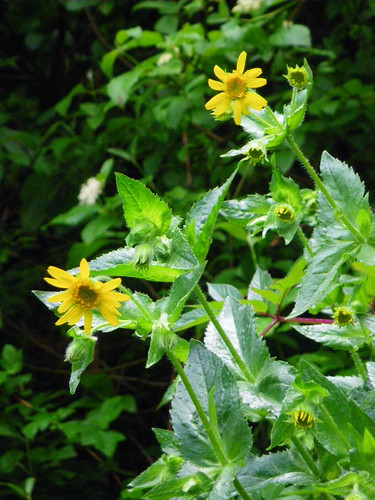
Flowers shown below are Broad-Leaved Stonecrop, Larkspur and Streamside Arnica.


Broad-Leaved Stonecrop


Larkspur


Streamside Arnica

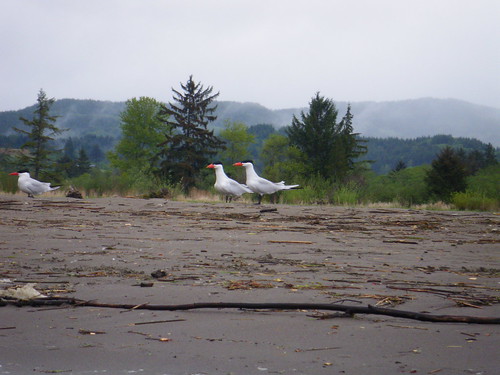
The controversial, but beautiful Caspian terns are back, to spend the summer nesting on sandy islands in the Columbia, and feasting on salmon smolts. You can read a little about the terns, and their presence on the Columbia River by clicking here.


Caspian Terns

In other springtime news, I did finally manage to catch a spring Chinook, with only a couple of days left of the season, and my brother caught his on the very last day. The water was so high and cloudy down in this part of the river that even though there was a decent run of fish passing through, the catch rate was pretty mediocre, and a lot of people went up above the confluence with the Willamette to fish in clearer water.

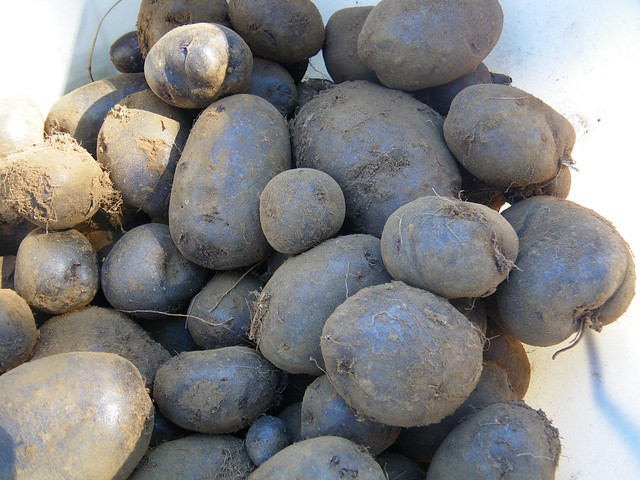
And I caught a very small window of dry, sunny days, and managed to till my garden beds while the soil was dry and warm. I got my potatoes planted, three 40′ long beds worth, just before the weather switched back to rain again. I bought fresh seed potatoes this year from Irish Eyes, and planted Russian Banana, a fingerling that has done well here before, Chieftan, a red potato, and Bintje, a variety I had never heard of before.

Now, if it would just stop raining for a little while….

One response so far

Feb 24 2010

winter

Published by admin under home, mechanical, river

Another long break in between blog entries…. I guess I haven’t been doing anything interesting enough to blog about!

After the end of hunting season, the days seemed to get shorter very quickly, and I kind of went into hibernation mode, feeding wood into the stove, reading, working on next year’s schedule, and conserving energy.


sunset

I stopped off at Solstice Forge’s annual Hammer-In party in November, but I forgot to bring along the project I wanted to work on, so I just visited, and watched other people beating on hot metal instead.


red hot

December brought an unusual hard, cold freeze to Skamokawa, with the thermometer reading about 9 degrees F every morning for over a week. I kept the taps running day and night, and even at that I had the water partially freeze up one night. I lucked out and got it thawed and flowing again pretty quickly, and didn’t suffer any broken pipes.


pilings

The Skamokawa Center wasn’t so lucky though, and pipes broke in most of the buildings there. At least this time, I didn’t have to fix it all.


ice on the window

After about a week and a half of subfreezing weather, a Pacific front moved in and warmed everything up. So far, we’ve not had a repeat of the snow event from last year. I never even got around to putting the studded tires on the car this year; even the K-M Mountain pass has been clear and bare all winter.


change in the weather

I went out for the Christmas bird count again, on a very cold and windy day. Not very many birds wanted to be out in that weather, but I did my part, and went out to Jim Crow Sands (yes, it is really named that, officially…) and found a pair of Horned Larks for the count.


sandy island in the river

Last month we had a little Burns Dinner at my brother’s house in Seattle. He ordered a haggis from the Swinery, a meat shop in West Seattle and made up a delicious lamb stew, and the traditional neeps and tatties to go with it. Guests each brought a bottle of single malt scotch, and Paul even brought two! Next year we’re thinking of doing it a little bigger, but my brother went so far this year as to recite the “Address to a Haggis” with a reasonable good Scottish accent.


single malts

After a very long period of uncertainty, Skamokawa Center was finally foreclosed on by the bank this month, and now the bank is looking to sell it off as quickly as possible. At this point, there doesn’t seem to be a long line of potential buyers waiting for their chance to own a quaint little inn and cafe out in the middle of nowhere. We’re hoping that in the meantime, Columbia River Kayaking can continue to rent and operate the paddle center like we did last year.


kayaks and sky

I have always been interested in machining technology. My very first job after high school was working in a machine shop, but I got laid off in the slow winter, and never got back around to that career path. But every now and then I’ll pick up a book or a magazine about machining and read it.

The lathe was the first basic tool of the industrial revolution; with it, you can make all of the other tools: milling machines, shapers, drill presses, etc.

One of my brother’s friends had taken an old lathe and some miscellaneous tools as payment on a debt, and he recently offered it all to my brother and I, so we purchased this 1936 South Bend Model 415 lathe, and a few boxes of tooling and other junk, along with a cheap Chinese drill press converted to milling service. I welded up a heavy steel table for it, and, a few hours at a time, I’ve been cleaning it up, researching its operation and hopefully I’ll be able to turn some metal in it soon.


South Bend lathe model 415

2 responses so far

Oct 25 2009

a long hiatus


seeds!

Well, here it is, almost Halloween and more than three months since I last posted anything! It has been a busy season, and I just haven’t felt very organized about blogging and posting pictures to Flickr. I have to admit, Facebook has absorbed a good deal of the time and energy I have for blogging and social interaction on the computer, but I am not ready to give up the blog just yet. So here’s a somewhat long update.


Pelicans at Buoy Ten

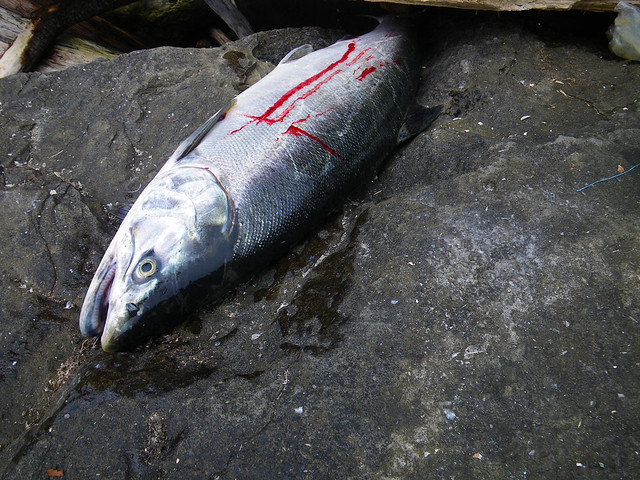
Salmon fishing this year was incredible. Almost every time I went out, everyone on the boat limited. One day Brian and Lisa and I went out in the ocean and kept six fish in under an hour, and put back five natives. It was about as hot as I have ever seen it. I smoked and froze a bunch of fish and when it got to be too much fish to have time to smoke it all, I vacuum packed and froze fillets instead.


Coho

In August, we held the Loco Roundup kayak symposium on Puget Island again. After a whole lot of last minute wrangling and logging approved training hours, I took the BCU four star sea kayak assessment, and passed. This is something I have been trying to get done for almost a year and a half, and it finally came together this summer. It was a two day, on the water assessment, leading a group of paddlers near Cape Disappointment at the mouth of the Columbia River. I was so focused on the task at hand, that it was only later I realized that I hadn’t taken a single picture for two days. But I did take pictures during the training sessions, and that’s where this picture is from.


Cape D

I also passed the three star canoe assessment, and took the new Level Two coaching class. With luck, a lot of hours practicing, and piles of paperwork, I might be ready to take that assessment next spring. I helped Ginni with two BCU assessments this year, one of them was a new two star with canoes and one was a three star assessment with candidates from three countries, speaking two different languages.


Canoe fun


navigation project

At the end of August, Shannon and I went to see Al Green at the Edgefield. Does Al Green still have it goin’ on? Yes, he certainly does…


Al Green at the Edgefield, August 28, 2009

Near the beginning of September, Columbia River Kayaking got the news that we will be allowed to run our own Elderhostel programs here next year, without the need for a middleman like we had this year. This will allow us more direct control over our interaction with Elderhostel and we will keep more money in the bank at the end of the day as well.


pilings and kayaks

Oh, and Elderhostel, for reasons I cannot fathom, decided this year to change the name that it has spent 25 years building brand recognition around. Apparently there is a sizable piece of the over-55 demographic that found the word “elder” to be offensive. The new name, which I might never get used to, is Exploritas. I’m sure there were many interesting committee meetings involved in that decision…


smooth water

Skamokawa Center continues to languish in limbo, though. There had been a foreclosure auction scheduled for October 2nd, but the day before, Greg and his LLCs filed for bankruptcy, which automatically shielded him from the foreclosure action. The auction was rescheduled for Friday, November 13th. Heh, heh, heh….


Sunrise in Port Townsend

The well ran dry this year. There was not enough August rain to keep it full for the whole dry season. I carried water for about three weeks, which isn’t too bad compared to other years. One year I hauled water for something like 80 days. Unfortunately, it always runs out just at the time that there are fish to clean and process…


the well

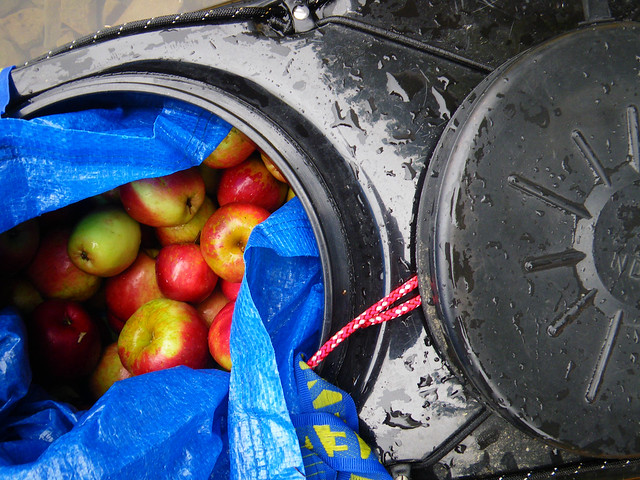
It was a great year for food preservation. For the first time in a long time, I was very organized and persistent in keeping on top of all the food that was showing up this year. Besides fish, berries were also in abundance and I made a lot of jam. And when Ginni left for Mexico, we had a big garden gleaning day at the farm and hauled away bags and boxes of produce, including an IKEA bag half full of jalapenos. I pickled a bunch of those, and Shannon and I made some jalapeno relish, and I have a big tray of roasted ones sitting here that I need to finish putting in jars tonight. I still have to get in the rest of the apples from here and Ginni’s place.


blackberries!

All of that food, plus the fact that I’ve been really broke this year led me to break ground on a new garden. I haven’t been willing to go all out with gardening here, since the water is not all that reliable, but I have been reading Steve Solomon’s “Gardening When it Counts” and setting this garden up with his minimalist irrigation plan in mind. Basically, you give each plant more space, and then relentlessly weed out any competitors for the water. I borrowed Krist’s tractor and tiller attachment and tilled up a space about 40×60 feet, and then made nine, five foot wide beds out of it. I planted three beds to garlic and the rest to cover crops for now. Fencing is next.


new garden

This will be the biggest garden I’ve grown since I lived in Salmon Creek, in 2000.


garden beds

This is also the first year I have purchased a hunting license. I didn’t grow up with hunting, so I never really learned anything about it, but I have had deer and bear in my yard this fall, and there are always elk around here, too. Last year, we bought a quarter of a local steer for the freezer, and spent several hundred dollars on that. It was delicious, and it’s nice to support local folk who are growing local meat. We bought a half a hog this year from Crippen Creek Farm. But I sure would like to put an elk or a bear in the freezer, too. We’ll see how that goes. With hunting season in mind, I’ve been sifting through the armory here, looking for an adequate elk rifle. I’ve been shooting my brother’s Dragunov rifle, but I haven’t been able to set it up on a bench and sight it in properly yet. It seems to shoot a little low and to the left. My practically new Browning shotgun might actually get put to use this year, too, since grouse are abundant around the land here and they are open until the end of December.


Dragunov SVD Tiger

I should have put up more firewood this year. I did a lot of work in the woods here this summer, making tractor trails so I can access the stands of trees there. But what I pulled out in that process is still only a cord or so, and three cords is more like what I use in a season here. No doubt I will actually end up purchasing a cord or two this year. I’ll get back in there in the spring to pull out another batch of logs to inoculate with Shiitake mushrooms.


alder logs


rocks

One response so far

Jul 20 2009

summer

Published by admin under boating, fishing, home, kayaking, river

Summer is flying by, and I’ve had little time to spend processing photos and blogging. So here’s a quick handful of pictures from this summer.

I do love fireworks, and I can get some really good ones right down the road in Cathlamet. The dog, however, does not think so highly of fireworks…


fireworks!

I went out one day and sat in the skiff for an hour in a place I had never tried fishing in before, and brought home this nice summer chinook.


early summer Chinook

Way back in April, I took Forbes magazine reporter Rebecca Ruiz out kayaking on the river here. She wrote this article that came out in the July 13 edition, and featured a few of my photos.


forbes screenshot

Raspberries have been really prolific this year, and for once, I have been staying on top of making jam as they get ripe. So far I’ve canned 18 pints of raspberry jam.


jammin'

Alice and I took a 20 mile skiff ride up to Ginni’s place on the island and back. It was fun, and since Cathlamet has a dock, we even stopped and grabbed some groceries on the way home. I love river life.


skiff ride

This is the gate to my little patch of forest. The grass gets really tall now that the sheep are gone.


gate

We got a bunch of coho salmon from the Astoria based trolling vessel “Little John”, and we smoked it.


salmon ready to smoke

Elderhostel programs have been humming along; here’s a picture of one of the intergenerational Elderhostel kids at Rocky Point.


Anna at Number 7, Gray's Bay

The feral bunnies still come in the yard and eat my kale, and dig in my beds.


backyard bunny

Wapato was a staple food for the native people here. It grows in the mud in the freshwater tidal sloughs and bays around here, and when properly cultivated and maintained, it produces an edible tuber, similar to a potato. Here’s some wapato underwater at high tide.


wapato

Chatterbox orchid (Epipactis Gigantea) grows on the abandoned pilings around here.


Chatterbox Orchid

2 responses so far

Mar 28 2009

finally!

Published by admin under boating, fishing, river

On my eighth fishing day on the river this year, I finally managed to put a fish in the boat. It was a cold and rainy morning, but since the season is only open three days a week right now, I have been making myself get out there on every open day, for at least a couple of hours. Today, it paid off, after only an hour and a half at anchor.


springer!

Not only did I manage to hook a springer, but no seals or sea lions got to it first, AND it was a hatchery fish, meaning that I could actually keep it. This is the first time since 2006 that I’ve managed to keep a springer. Last year I got skunked completely, and the year before the seals got the one fish I had near the boat.

For you fish geeks out there, here’s the specifics:

I was anchored up, in 17 feet of water alongside Welch Island near Skamokawa. I was fishing a sliver and green striped K14 Kwikfish, at the very end of a strong ebb tide. Fish weighed 12#, troll dressed.

No responses yet

Mar 25 2009

river time

Published by admin under boating, fishing, kayaking, river


net and water

It’s been a long and grumpy winter for me, with lots of time spent on the phone and email trying to sort out a new way forward for our kayak center here in Skamokawa. It’s easy to lose perspective when you sit inside all day, and a couple of weeks ago, I finally started breaking away from the office to get out on the water. I put the skiff in the water on my birthday, March 10 and started fishing for spring chinook. So far, I haven’t caught anything, but it is early yet, and tomorrow is the first day of another three day opening, so maybe my salmon luck will change soon.


unaaq and norsaq

And yesterday, I finally got out in a kayak again, for the first time in weeks. I took out the Valley Q-Boat, which was loaned to me by Rob Avery of Valley Kayaks. It is a fiberglass, hard chined, Greenland style kayak. It seemed to roll pretty well, and for an 18 foot long kayak, was very maneuverable and nimble. Andrew took out one of the new plastic Valley Avocets and we paddled down to Three Tree Point and back. I took the harpoon along just for fun, and found that I’m sadly out of practice, compared to what I was able to do with that last fall. Sigh…

Enjoy some pictures!


springer fishing


skiff and triangles


north shore


Valley Q-Boat

2 responses so far

Jan 02 2009

a few favorite photos of 2008

None of these have been blogged before. No words today, just pictures. Enjoy!


buoy


Skamokawa Creek


floating wood


tiny newt!


Unimog


farm cat


Andrew


Astoria anchorage


ancient cedar tree


snail shell


apples!


hardie hole


ladybug


piling


number 35


reflected pilings


resting boats


pilings


Moon and Stars


water and rocks

One response so far

Sep 16 2008

buoy ten

Published by admin under boating, fishing, river


Buoy Ten

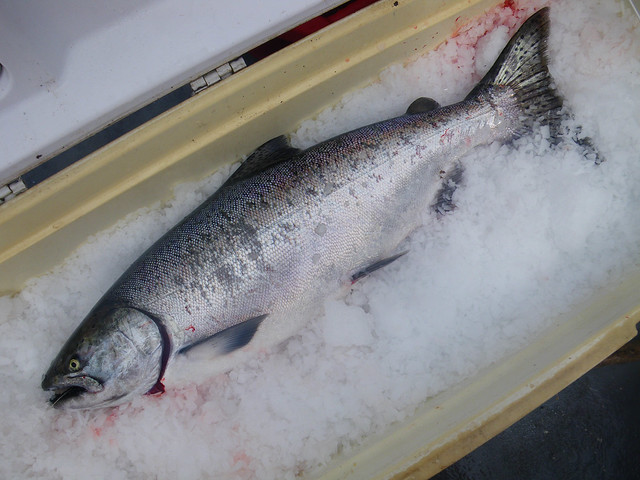
Every summer, staring in July, coho and chinook salmon start gathering up in the ocean offshore of the mouth of the Columbia River. They are getting ready to start their migration upriver, to the stream that they were born in, to lay eggs and start the cycle over again. And every August 1st, the summer river fishing season starts at Buoy Ten, near Ilwaco and the ocean.


fish face

Buoy Ten is the western boundary of the river fishery. Beyond Buoy Ten is the legendary Columbia River bar, and then the Pacific Ocean. To fish in the ocean, you have to go out past Buoy Four, which gets you out past the jetty tips and out of the worst of the turbulent waters of the bar.


underway on the ocean

I started fishing at Buoy Ten in 2004, a few months after buying my aluminum Valco Bayrunner skiff, which was the first craft I owned that was capable of handling the waters at the mouth of the Columbia River. My brother James and I caught several fish that year, fishing inside the river, behind Buoy Ten. The following year was a very good year for Columbia River salmon. Every fishing trip I took that summer was a success, bringing home at least one salmon, including several kings, or chinook. Many days I kept two, which is the limit. The fishing has not been that good since!
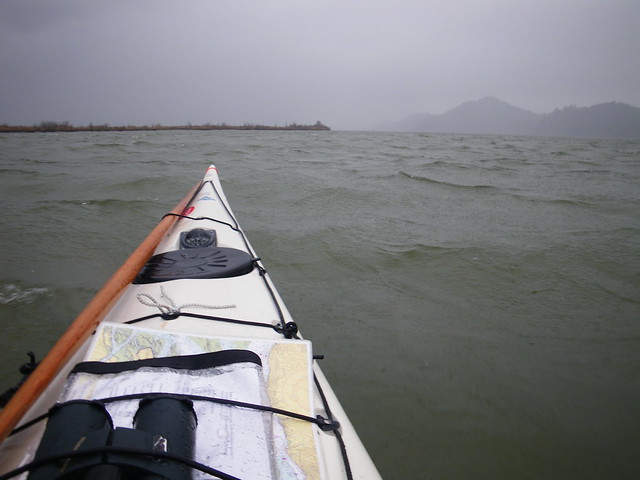

coho limit


crossing the bar

That summer was also the first time I decided to brave a bar crossing on my own. I had been fishing inside all day and was getting nothing, while the radio was crackling with awesome fishing reports from the vicinity of the CR Buoy, several miles outside in the ocean. The weather was mild and the waters seemed pretty flat where I was. The radio reports were saying that the bar crossing was easy, so I finally decided to give it a try. I had read several articles about bar crossing, including this one at salmonuniversity.com, and so with that in mind, I headed outside, following the “red line”, or the row of red, even numbered buoys that mark the Oregon side of the shipping channel. The last one in the row of numbered buoys is number two and then it is about two and a half nautical miles to the “CR” buoy, where all the fish were supposedly being caught, about eight nm from the beach in Oregon.


CR buoy

It took just a short time that day to catch my limit of salmon, and ever since I have fished in the ocean if it is possible to get outside safely.

I have had a lot of adventures at the Buoy Ten fishery in the intervening years. My brother caught a 30 pound king one year at the CR buoy, on the same day we discovered a rather large leak in the Valco. Our desire to get back inside safely pushed us to a poorly timed bar crossing, which we survived unscathed. However, I will never forget what that water looked like as we came back across in a 16′ skiff with a bilge full of water, while the tide was still ebbing pretty hard. I have never seen water doing so many contradictory things in such a short distance!
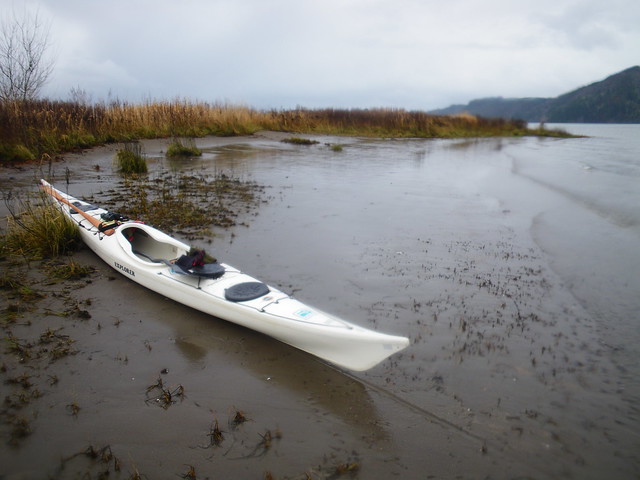

King Salmon, August 06

The following year, in a larger fiberglass boat, I cut too close to the “A” jetty near the Ilwaco entrance and hit a submerged rock, which tore the outdrive right off the back of the boat. I started sinking immediately and fortunately was able to radio the US Coast Guard who came and towed me in to the boat ramp and helped me trailer the crippled boat. That one is still sitting in the driveway awaiting repairs, two years later. It is not easy to find old Mercruiser parts, and when you do find them, they are not cheap!
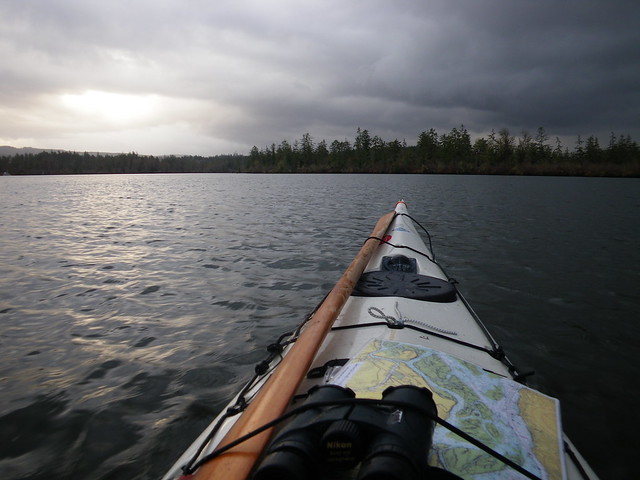

trolling

We have broken fishing poles with fish still on the line, inadvertently caught flounder when trolling too close to the bottom, and had many, many crab traps stolen by local scumbags. I took Alice out across the bar for her 13th birthday and she caught her first salmon ever, in the ocean near the CR. That day we hooked the first fish as I was letting the line out on the first pole. It literally took about eight seconds! We had two fish in less than 45 minutes.


Alice and salmon


*******************

This year, though, with my ultra-busy schedule and the extraordinary cost of gasoline and diesel, I did not fish nearly as many days down there as I have in the past. I went out in the ocean by myself for a couple of days near the middle of August and kept one nice silver, and then my brother came down near the end of August and we fished for two days, but inside the river, as the ocean was closed by then. He kept two silvers on the second day and that was it for our 2008 Buoy Ten experience. It was closed the next day, due to higher than expected catch rates on a smaller than expected run of fish.


salmon and herring

The second day I was fishing down there by myself, I took some video with the little Pentax. It was getting late in the afternoon and the northwest wind was really starting to kick up. This is the first time I’ve tried posting a video clip here. Check it out:


Now, I have gotten a lot of teasing from friends and family about the cost of my salmon habit, when measured in gallons of diesel and gasoline at $4 each. And admittedly, I have brought home some very expensive salmon over the years. But two years ago, I finally bought one of those “Little Chief” smokers from the sporting goods store, and the equation looks a lot better now. If you have to buy smoked salmon at the store, you will pay about $25/pound for it in a year when there is not a shortage of salmon. So one good sized silver, when filleted and put through the smoking process, can easily become “worth” about $200 or better. That buys a lot of gasoline!

And my salmon, smoked with alder twigs off of the land here, tastes way better than any smoked salmon you will ever find in a store! The recipe is here.


smoked salmon


gulls

2 responses so far

Jul 02 2008

(almost) 40 miles

Published by admin under kayaking, river

This is a trip I’ve wanted to do for a long time. I’ve paddled from Skamokawa to Astoria several times in the last couple of years, and the last time I went down there, I felt like I had energy to spare and joked with my clients that we should paddle back with the flood tide. They looked at me like I was crazy…

It is about 19 miles or so to paddle from Skamoakwa to Astoria, and so doubling that would come in at just under 40 miles, the longest paddling day I’ve ever done. When Ginni and I were building the schedule a few weeks ago, we were looking for a compatible tide series for this trip, and the only one that was available to us demanded a 4 AM departure from Skamokawa. We looked at each other and said, “Why not?”

The plan was to paddle to Astoria on the ebb tide, arrive around 8:30 or so, and eat breakfast at the Blue Scorcher bakery, just a couple of blocks up the hill from the Maritime Museum. Then when the tide turned, we would head back upstream to Skamokawa.


What 4:30 in the morning looks like

So we dragged our butts out of bed at an unnatural hour, made our way down to the dock, and set out downstream, leaving Skamokawa at 5 AM. There was a strong current flowing out and my new GPS showed us zipping along at 7 mph. Ginni borrowed the GPS and got her kayak up to 8.5 mph for a moment.

Down below Miller Sands, where the shipping channel turns towards Astoria, the dredge equipment was working, and we also saw this buoy, tangled in several hundred feet of gillnet. I’ll digress here for a minute. First of all, these nets are not cheap! Why anybody would lay out thousands of dollars worth of net in a place where they would risk tangling it this severely is beyond me. And it wasn’t just snagged on the end, either; whoever did this evidently drifted down on this buoy with the net strung out for hundreds of feet on both sides of it. But what really gets me is that after it tangled on the buoy, they just cut it loose and abandoned it, as a hazard to fish and to navigation. The bright side of this story is by the time we passed this buoy again on the way home, the guys running the dredge equipment had removed the net and piled it on one of their barges.


number 6, festooned with gillnet

That last leg of the paddle from Rice Island to Astoria is a long one, since the destination is in plain sight for so long, without seeming to get much closer. Finally we starting pulling up on Tongue Point, just east of town.


approaching Tongue Point

By this time, we were starting to smell the cinnamon rolls and coffee!


Ginni

Not long after, we were pulling into the East Mooring Basin to see if there were any lingering sea lions hanging around. We only saw one, apparently not with the program as most of the rest of the gang is off to California to the breeding grounds.


entrance to the East Mooring Basin

Here’s a great name for a fishing boat, huh? And a bottom dragger to boot! Last year, the trawling industry here was hit with scandal when they were caught dumping and grinding up protected rockfish bycatch to prevent their whiting season from being shut down. Nice, huh? Little was done about it and they continued to fish for whiting even after being caught cheating the system. And this year, when salmon fishing is sharply curtailed all up and down the coast, the trawl industry gets to kill 11,000 Chinook salmon as bycatch. Can you tell I’m not a fan of the trawl boats?


God's Will?

I don’t know much about this boat, except that it is an old, out of service pilot boat. It is a beauty though, with such a great color scheme. Here’s what I found when I googled it.


kayak and pilot boat

We paddled under the old red cannery building that was so damaged in last winter’s windstorm and then up to the dock at the Columbia River Maritime Museum. The mileage to this point, measured by GPS, was 19.4 statute miles and we did it in 3 hours and 15 minutes. Not too bad! But we knew the return trip wouldn’t be so quick…


under the cannery


Astoria


the dock at the Maritime Museum

After changing into “cilvilian” clothes and stowing the kayaks, we headed up to the bakery, where we spent an hour or so hanging out drinking coffee and eating breakfast. Josh looks like he’s still asleep though!


at the Blue Scorcher


at the Blue Scorcher

We got back on the water about 10:30, when we saw the ships at anchor starting to swing around with the change of the tide, and headed back past Tongue Point, where we saw four or five sturgeon jumping and rolling in just a few hundred yards. What makes them do that?

While our average speed on the downriver leg was 6.4 mph, now we were only averaging 4.3, and as we pulled alongside Rice Island and the dredge equipment again, the wind was starting to blow. We stopped on Miller Sands for a quick break and then continued on.


taking a break

This part of the trip was much less smooth than the first part, and we were soon surfing wind waves, and, around 30 miles or so, were starting to feel a bit tired! We took another break below Jim Crow Point and then got back to work for the last 5 miles or so. This part of the trip had only taken 50 minutes earlier in the day, now it took almost twice that! As we were pulling up next to Skamokwa, we were actually starting to notice an ebb current again.


where's the kayaker?

We finished the trip back at our home dock at 4 PM, eleven hours after we had begun. We covered 39.2 miles in eight hours and five minutes of paddling time, according to the GPS. We were tired, my drysuit was leaking and our boats seemed heavier than ever before as we carried them up the ramp to the paddle center. I joked that next time we should do the same trip in whitewater boats, just to keep things interesting. Oddly, there wasn’t a lot of enthusiasm for that idea….


Finished!


finished and tired!

No responses yet

Next »